


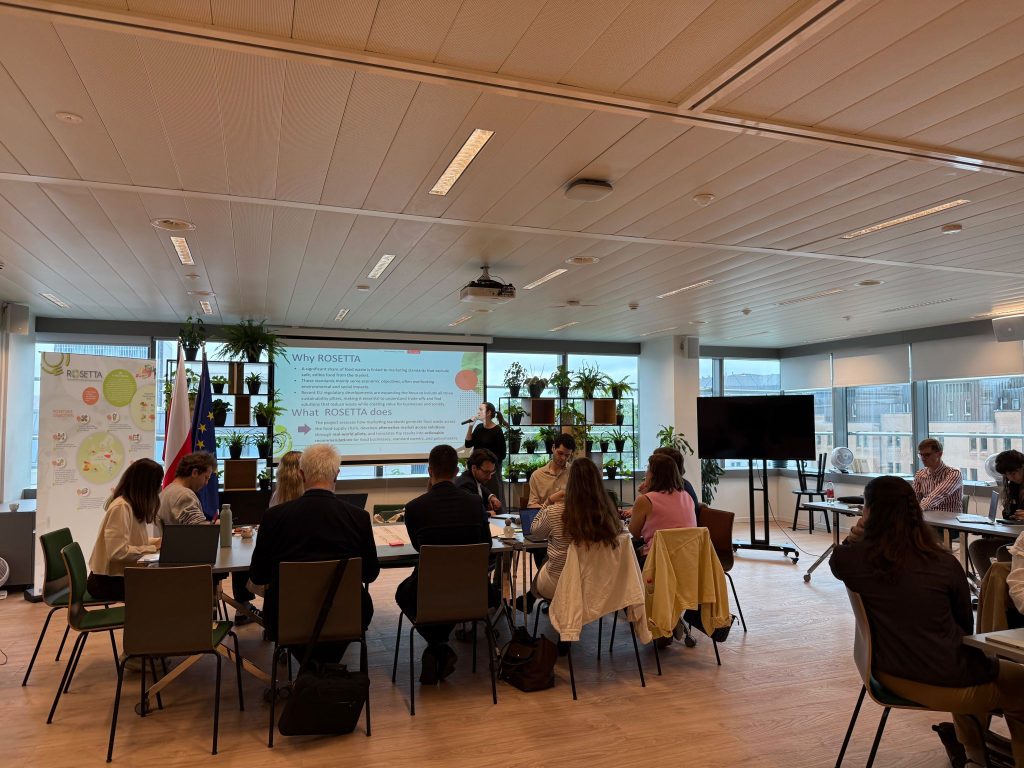
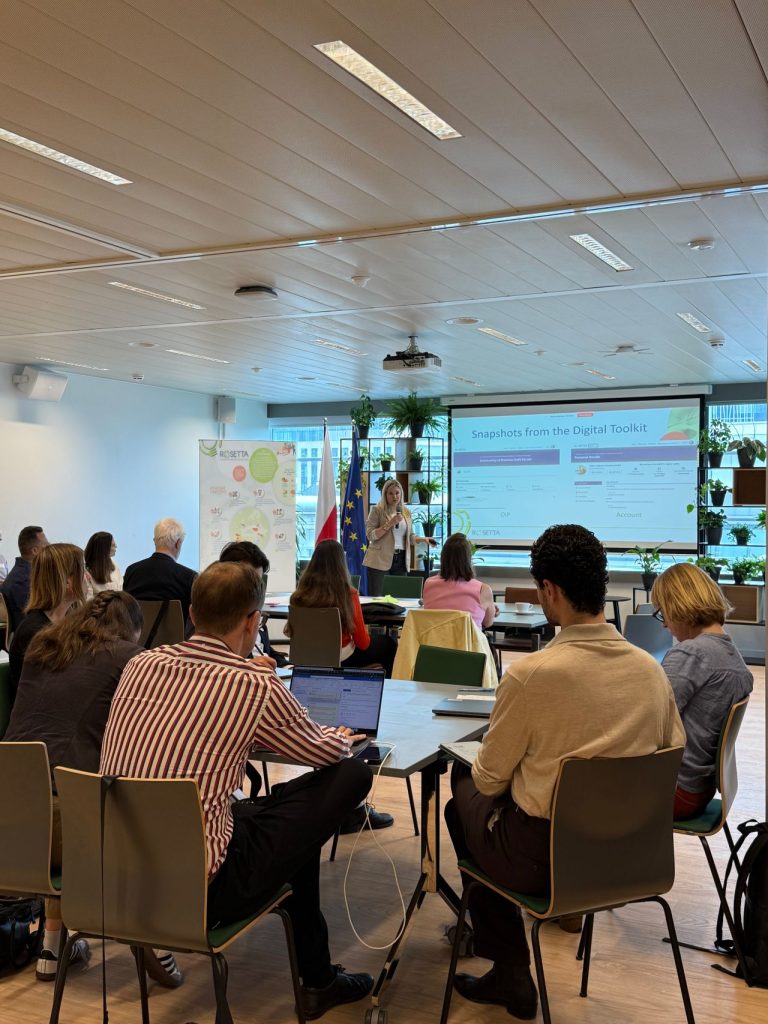
The ROSETTA project brought together representatives from European institutions, the agri-food sector, research organisations and related European initiatives for a series of International Roundtables focused on the practical and policy conditions needed to reduce food waste.
The roundtables were hosted by EUCOFEL FruitVegetablesEurope, which led the Policy Roundtable discussions, while PEDAL Consulting guided the Business Roundtable. The two complementary sessions created space to examine food-waste prevention from both regulatory and market perspectives.
Participants included representatives of the European Commission’s agriculture and food, and health and food safety services, the European Parliament Office of Carmen Crespo, ASAJA, the Slovak Liaison Office for Research and Development in Brussels, euCommerce, Schuttelaar & Partners International, and the SISTERS and BREADCRUMB projects, together with other invited experts and stakeholders.
Moving beyond technical solutions
A central message emerging from the discussions was that reducing food waste requires more than developing new technical tools or interventions. Even promising solutions may struggle to achieve meaningful impact unless the responsibilities of the different actors involved are clearly defined and the conditions for implementation are properly understood.
Participants therefore emphasised the need for clear roles across the food supply chain. Producers, retailers, policymakers, researchers and consumers each influence how food is produced, marketed, purchased and ultimately used or discarded. Effective food-waste prevention depends on ensuring that these actors understand both their responsibilities and how their decisions affect the wider system.
Collecting data that supports action
The roundtables also highlighted the importance of purposeful data collection. Rather than collecting information without a clearly defined use, participants stressed that data should respond to specific questions and support better decisions.
This means identifying which information is genuinely needed to understand where waste occurs, why it occurs and which interventions are most likely to address it. Data should ultimately help stakeholders evaluate possible solutions, allocate responsibilities and measure whether actions are producing meaningful results.
Ensuring solutions are viable in practice
Another recurring theme was the need to consider the operational and economic realities faced by food-sector stakeholders.
Solutions intended to reduce food waste must not only be environmentally sound. They must also be practical, financially realistic and feasible for the organisations expected to implement them. This is particularly important when solutions involve changes to established commercial practices, supply-chain processes or the application of marketing standards.
Long-term uptake will therefore depend on aligning sustainability ambitions with the practical needs and constraints of businesses and other food-chain actors.
Cooperation across the food supply chain
The discussions reinforced the value of collaboration across sectors and institutional levels. Food waste is shaped by interconnected decisions throughout the supply chain, meaning that isolated action by a single stakeholder group is unlikely to be sufficient.
Closer cooperation among public authorities, businesses, researchers, civil society and consumers can help ensure that proposed measures respond to real needs, avoid shifting problems from one part of the supply chain to another, and receive the support required for implementation.
The roundtables demonstrated that effective food-waste prevention depends on a combination of evidence, governance, economic viability and shared responsibility.
Informing ROSETTA’s final recommendations
The contributions gathered during the Policy and Business Roundtables will now feed into a broader analysis of the discussions and stakeholder perspectives.
These insights will support the development of ROSETTA’s final recommendations, expected in September 2026. The recommendations will seek to connect the project’s research with the operational and policy realities identified by stakeholders, helping to support more informed and implementable approaches to reducing food waste linked to marketing standards.
